With the support of a local savings group in Chimoio, Mozambique, Lucinda Sande was able to expand her banana farm and invest in her family's future.
This post was originally published by USAID/Mozambique here.
Banner photo: Lucinda Sande on her green banana farm. Photo credit: Yardy Covane, RAMA-BC
Lucinda Sande’s life was not easy after her husband died and the 40-year-old farmer became her family’s only source of income. A few years later, Cyclone Idai struck her community in Manica province, Mozambique, severely damaging the family home and fields. Despondent at first, Lucinda knew she had to continue to plant and harvest her crops just to survive. She was able to meet her family’s basic needs, but Lucinda wanted more for herself and for her six children.
When a neighbor invited Lucinda to join a farmer savings group, she thought her meager profits from harvest would not be enough to contribute. But she decided to take a chance. She signed up, started saving and, with some trepidation, began making plans for her family’s future.
In Mozambique, farmer savings groups are an important way smallholder farmers can build financial independence and gain access to funding for small business ideas. The groups of 20-30 farmers meet weekly, save, and lend money to each other. They self-select members based on trust. The interest accrued from the loans is reinvested and groups 'cash out' at the end of a 12-month cycle. Savings and interest are proportionately redistributed back to members and another cycle starts. Members can also borrow from an interest-free emergency 'social' fund with consensus from the group.
The
Feed the Future Resilient Agricultural Market Activities - Beira Corridor (RAMA-BC) program has helped start 70 of these savings groups in the Beira corridor of Mozambique, a mostly rural area where most people’s work is linked to agriculture. The program works with community members to promote the benefits of savings groups, provides basic financial literacy training, and gives guidance on setting the rules for the group. During the weekly meetings, members also receive information on nutrition, gender equality, and gender-based violence, drawing on videos and field manuals developed with USAID support. The savings groups are not given ‘seed money’ from USAID; all capital and interest payments are raised by participants themselves.
These groups provide trusted financial services to people who do not have access to traditional banks. The money kept within a savings group is secured and transparency is built in, with public accounting and shared keys. Most savings are lent out weekly, freeing borrowers from loan sharks, prioritizing investment over consumption (as borrowers pay interest monthly) and increasing economic activity.
After only eight months, Lucinda’s contributions in the group allowed her to withdraw about $75 and finally fix her cyclone-damaged house. This small, but important success, emboldened her to think bigger and start making sustainable positive changes for her family. She continued saving, growing both her confidence and the size of withdrawals she could make from the savings group.
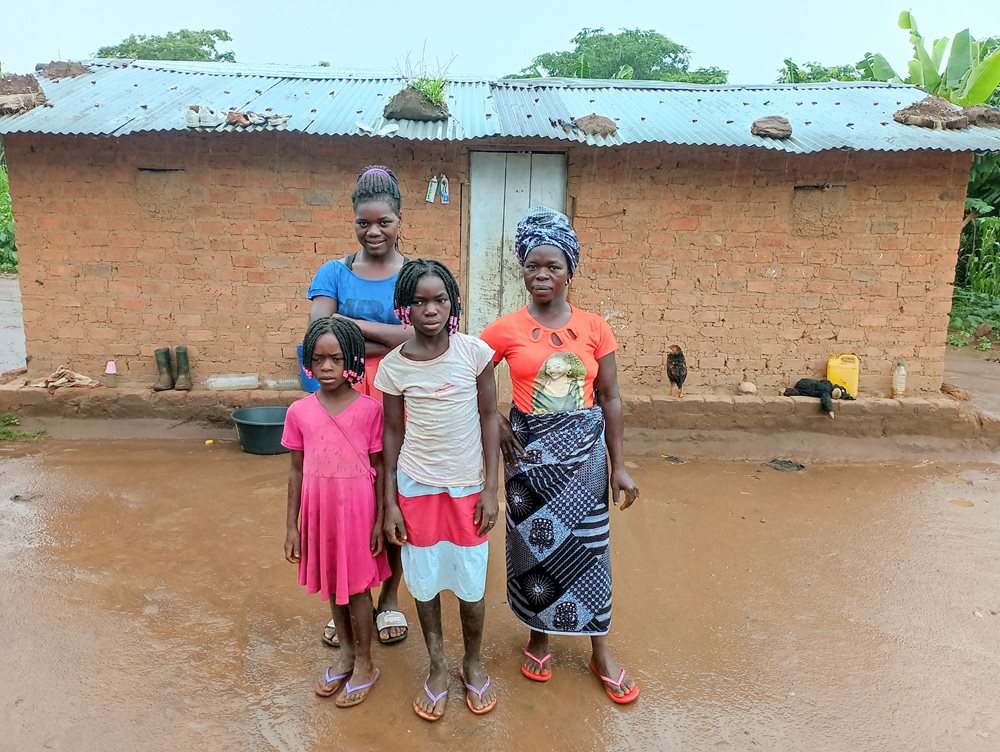 Lucinda and three of her children stand in front of the home that they repaired, thanks to Lucinda's savings group.
Her first investment was to expand her business of selling green bananas she grew at home to the main market in the nearby city of Chimoio. With the extra money from the savings groups, Lucinda was able to purchase more bananas from local farmers to sell at a profit in Chimoio. Right away she was able to sell four times as many bananas as she did before joining the savings group. Her simple business idea was now a real game changer for her income!
And so, she started saving again. At the end of the second 12-month saving cycle, Lucinda withdrew $640. With this, she was able to increase her cropping area, cover her household expenses, and invest in her children's studies. In addition to books, uniforms, and backpacks for her younger children, she helped pay some of her oldest daughter’s college fees, who Lucinda proudly reports is now studying to be a teacher.
She also took some small loans from the savings groups to diversify her business into other food products, such as flour and oil, from her house in Macate. Lucinda now has an established clientele, and a regular income, with 2 income streams: one from bananas and one from her shop.
Women make up about 60 percent of the membership in Mozambique’s farmer’s groups, offering leadership opportunities not often seen in rural areas. In fact, Lucinda is currently serving as president of her savings group. She is eager to share what she has learned about building a business with other women like her.
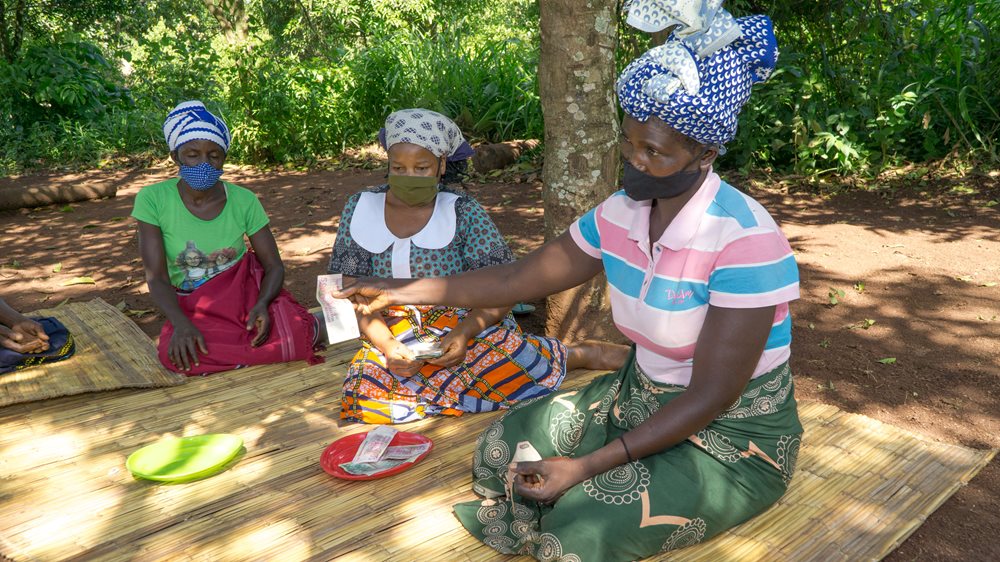 Members of farmers savings group making monthly deposits. Photo credit: Charles Adam/Tufo Produções
In the third savings cycle, Lucinda took home $950. She invested this in land to build a house and farm a small plot in Chimoio, where her older children attend secondary school. She plans to build a brick house that is resilient to climate shocks and bad weather. Her children will need a safe place to stay while they are studying in the closest city and Lucinda is proud that she can provide that for them.
Lucinda feels alive and empowered for the first time since her husband died. She plans to continue with her green banana business, to expand her farm and, importantly, to keep saving with her group. The hopelessness she felt after her husband died is only a memory now. She knows that her hard work and planning can support her family. She is content but hasn’t stopped dreaming about the future. Her latest plan is to make sure she can help all her children attend college. That way they can get started on whatever each of their dreams are.